Environmental degradation is already harming public health, livelihoods, and the country’s long-term resilience, such as polluted rivers, coastal waters, and drainage systems worsen flooding, threaten food security, and expose communities to serious health risks.
As environmental stewards, PBEST underscores that one of the most urgent and persistent drivers of environmental degradation today is water pollution caused by untreated domestic wastewater, inadequate sewage and septage systems, and weak enforcement against illegal discharges into waterways.
Recent assessments indicate that only around 10 percent of wastewater in the Philippines is treated, while an estimated 58 percent of groundwater is contaminated and only about 5 percent of the population is connected to a sewer network—underscoring the scale of the challenge. In key water bodies such as Manila Bay and its tributaries, fecal coliform levels have repeatedly exceeded national water quality guidelines for recreation, reflecting the continuing discharge of untreated sewage despite the Philippine Clean Water Act of 2004 or Republic Act 9275.
PBEST urges government, businesses, and civil society to expand sewage and septage management systems in highly urbanized and coastal areas; strengthen monitoring and enforcement against illegal wastewater discharges from domestic and industrial sources through clear penalties and measurable compliance targets; improve coordination among national agencies, LGUs, and the private sector to ensure water quality standards translate into practical and enforceable local systems; and invest in wastewater treatment infrastructure and scalable technologies that support growing communities while reducing long-term environmental and health costs.
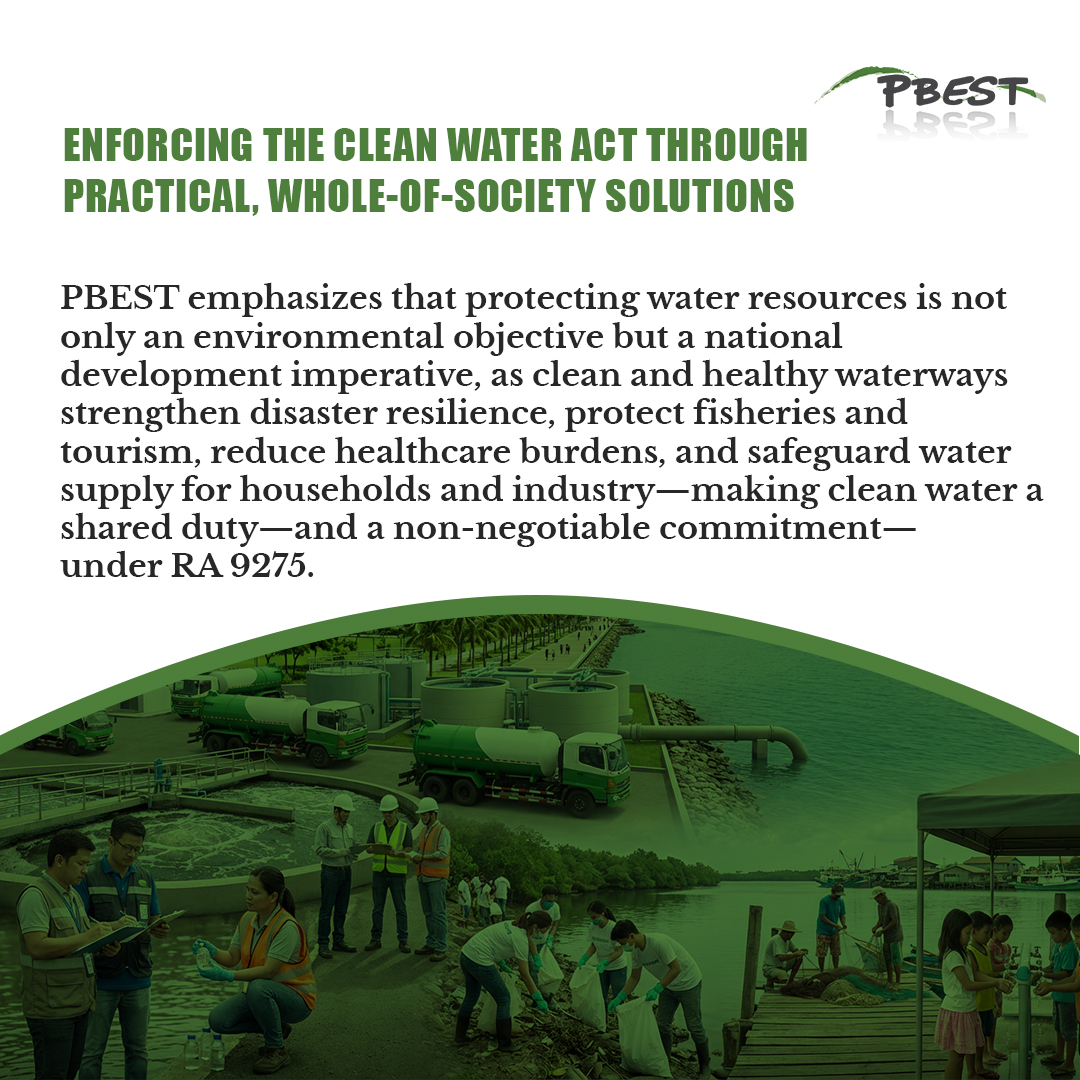
PBEST emphasizes that protecting water resources is not only an environmental objective but a national development imperative, as clean and healthy waterways strengthen disaster resilience, protect fisheries and tourism, reduce healthcare burdens, and safeguard water supply for households and industry—making clean water a shared duty—and a non‑negotiable commitment—under RA 9275.