
Extreme weather and recurring calamities continue to disrupt lives, livelihoods, and local economies—yet public urgency remains uneven. A recent Pulse Asia survey shows that only 8% of respondents identified responding to the needs of areas affected by calamities as an urgent national concern. This signals a critical gap that leaders must address: as climate risks intensify, preparedness and resilience must be treated as everyday necessities—not seasonal concerns that only surface after disaster strikes.
Disaster preparedness is more than just an emergency response—it is long-term nation-building. This means building climate-resilient infrastructure, strengthening early warning systems, and ensuring rapid, well-funded response and recovery for vulnerable communities. Investing in preparedness saves lives, protects development gains, and reduces the devastating economic costs of repeated destruction.
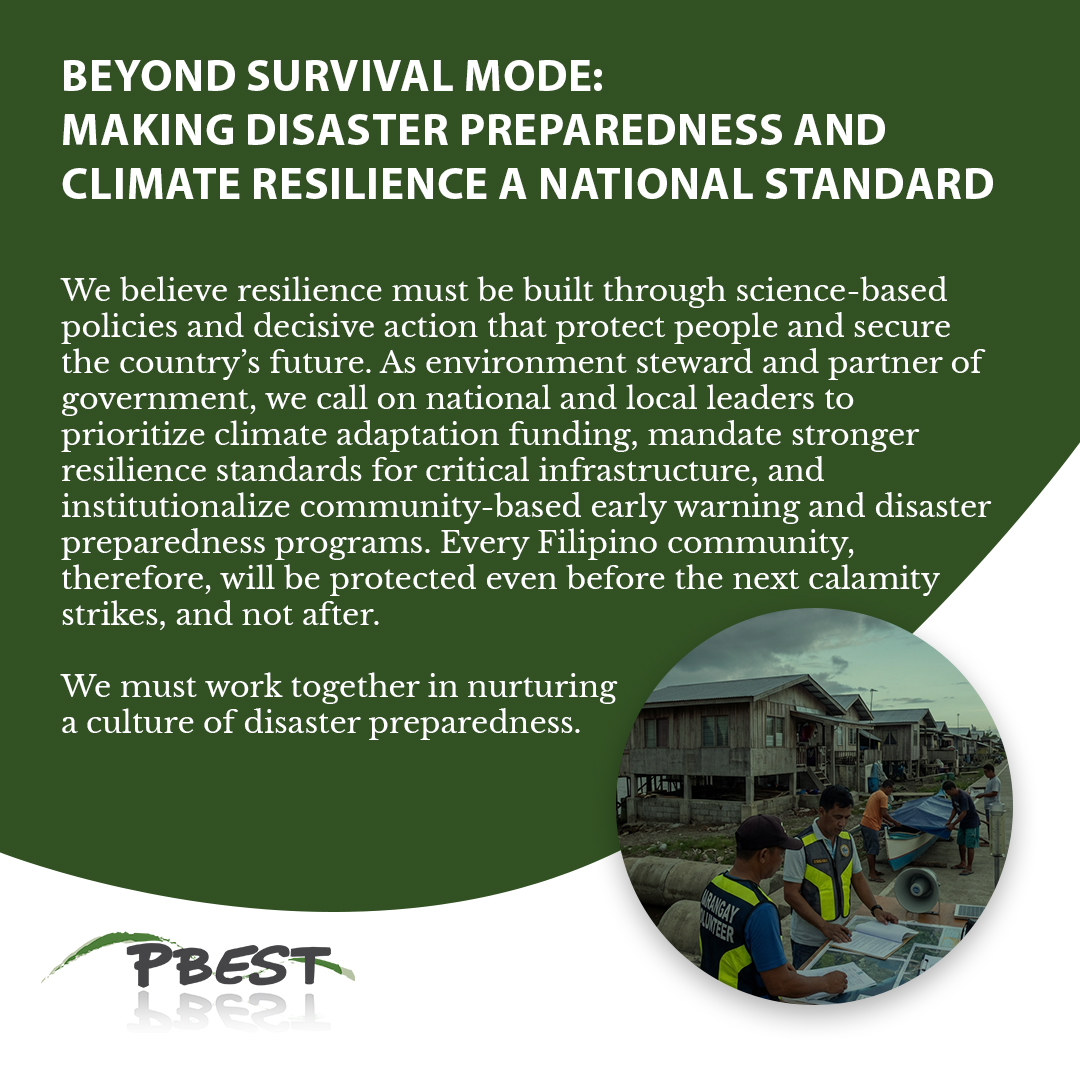
At PBEST, we believe resilience must be built through science-based policies and decisive action that protect people and secure the country’s future. As environment steward and partner of government, we call on national and local leaders to prioritize climate adaptation funding, mandate stronger resilience standards for critical infrastructure, and institutionalize community-based early warning and disaster preparedness programs. Every Filipino community, therefore, will be protected even before the next calamity strikes, and not after.
We must work together in nurturing a culture of disaster preparedness.